Book Review: Living by the Buddha's Words
Book Info
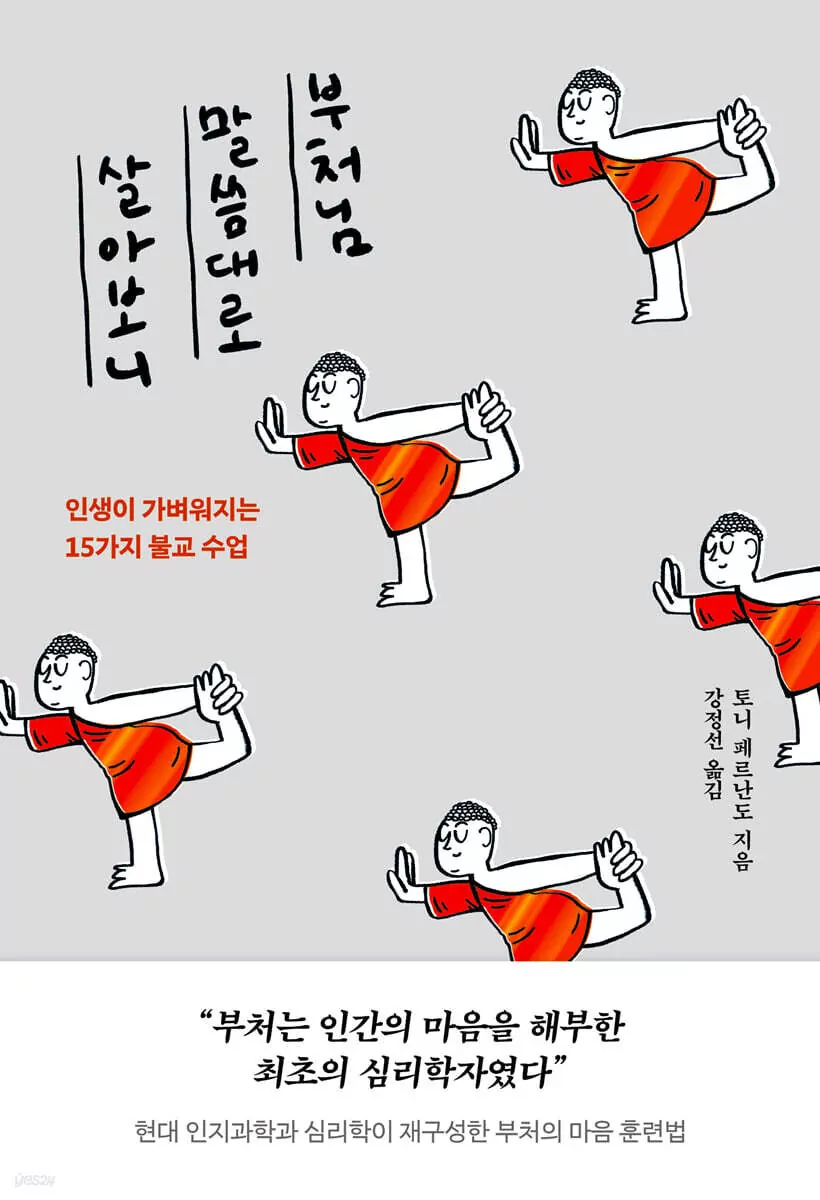 Living by the Buddha’s Words (image from yes24)
Book: Living by the Buddha’s Words
Author: Tony Fernando
Translator: Kang Jeong-seon
Motivation
Living in modern times requires each of us to cultivate our own inner discipline.
With that in mind, I read “Living by the Buddha’s Words,” and it turned out to be a satisfying read.
A Few Passages
“Every human being is, without exception, mentally imperfect. Accepting this leads to the conclusion that we need to be more generous toward others.”
-p69-
“Staying silent lets you see your thoughts and intentions clearly. You notice the urge to praise, but also the urge to simply criticize. You also come to realize just how often you speak purely because you feel the impulse to speak.”
-p109-
“Consistently practicing the precept of non-harming naturally deepens your sense of connection and compassion toward other living beings. This connection and compassion become key ingredients of happiness.”
-p118-
“Practicing restraint reduces the urge to satisfy sensory pleasures, and compassion fills the space that’s left behind. As compassion grows, you’re no longer a slave to desire.”
-p130-
“Kindness doesn’t happen reflexively. You have to practice it consciously, trusting that your quiet kindness will benefit others.”
-pOOO-
“Someone who consistently gives builds trust within their relationships, and it leaves them with a sense that ‘I can be of help to someone.’ That sense proves especially valuable during turbulent times. What carries us through life isn’t the total sum of what we own, but the trust and peace of mind we’ve built up along the way.”
-p157-
“Everyone carries various cognitive biases and distortions, which often lead us to perceive the world unrealistically.”
-p182-
“This present moment is the result of countless conditions beyond our control, so we need an attitude of accepting whatever is happening here and now.”
-p189-
“Even a fake smile can trick the brain into relaxing, because a half-hearted smile still fools it. That’s because the facial muscles and the brain are connected.”
-p209-
“Recognize the impermanence of emotion. ‘Sadness has arisen, but it will pass soon.’ Recognize that you are not your emotions.
‘I am not sadness. Sadness is not me. It’s just one of the countless experiences that arise and pass away.’”
-p220-
“The goal of Buddhist practice is the cessation of suffering.”
-p229-
“Desire becomes craving, and repeated craving becomes attachment. When attachment hardens into habit and you lose the power to stop on your own, that is addiction.”
-p240-
“The way to cultivate compassion is simple. Focus on what we have in common.
Realize that we are all the same kind of being. Regardless of race, nationality, religion, economic background, or political belief, we all want the same things.
We all want to be happy, to be loved, and to live safely. We all want food, water, and comfortable shelter, and none of us wants anxiety, suffering, or stress. And every one of us experiences sadness, loneliness, loss, and death.”
-p286-
Closing Thoughts
Suffering is, at its core, an inherent part of life.
On top of that, the nature of a company under capitalism is generally to generate profit, which stands at odds with the cessation of suffering.
So I often feel how important inner discipline is for the physical and mental health of people living in the modern world.
I’ve heard that when Buddhists part ways, their farewell greeting is a wish of loving-kindness for the other person.
To everyone reading this: I hope you find freedom from suffering and anxiety, and that happiness and peace stay with you.