Java) Wrapper / Expressions / Labeled Loops
type check
Wrapper class type
1
2
3
4
5
6
7
8
9
10
11
12
13
    public static void main(String[] args) {
        String t1 = "TEST";
        System.out.println(t1.getClass().getName());
        //java.lang.String

        Integer t2 = 7777;
        System.out.println(t2.getClass().getName());
        //java.lang.Integer

        List<Integer> t3 = new ArrayList<>();
        System.out.println(t3.getClass().getName());
        // java.util.ArrayList
    }
Primitive type
1
2
3
4
5
6
7
8
9
    public static void main(String[] args) {
        int a1 = 3;
        float a2 = 5;
        double a3 = 7;

        System.out.println(Integer.class.isInstance(a1)); //true
        System.out.println(Float.class.isInstance(a2)); //true
        System.out.println(Double.class.isInstance(a3)); //true
    }
You can also build a primitive typeof with overloading:
1
2
3
4
5
6
7
8
9
10
11
12
13
14
15
16
17
18
19
class Check {
    public static Class<Integer> typeof(final int expr) {
        return Integer.TYPE;
    }

    public static Class<Long> typeof(final long expr) {
        return Long.TYPE;
    }

    public static Class<Float> typeof(final float expr) {
        return Float.TYPE;
    }

    public static Class<Double> typeof(final double expr) {
        return Double.TYPE;
    }

    // ...
}
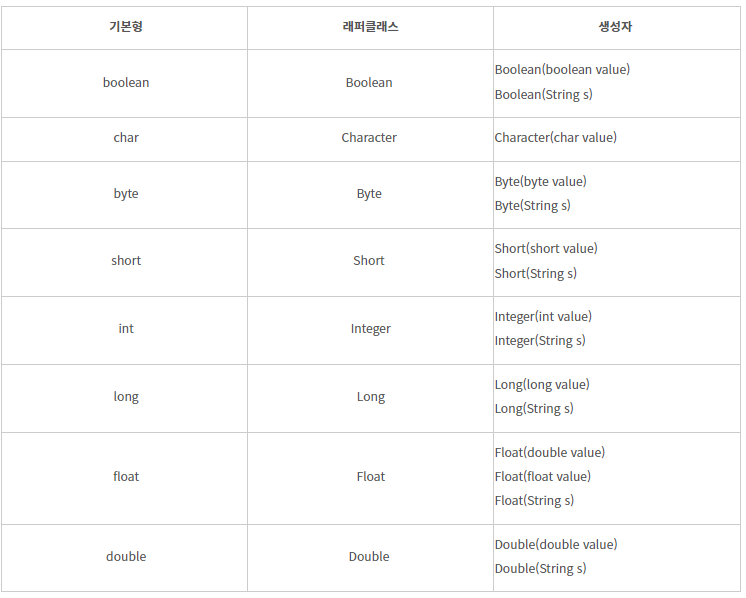
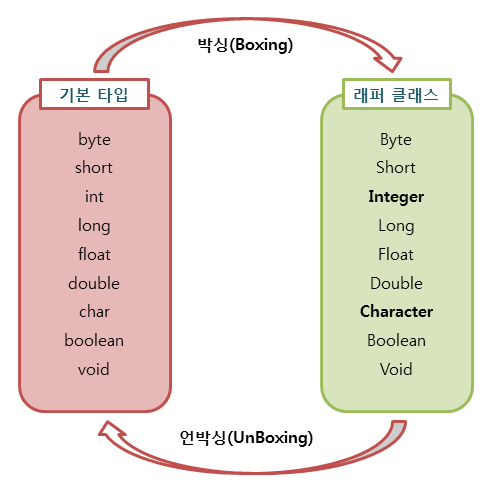
Wrapper class
1
2
3
4
5
6
7
8
9
10
11
12
public static void main(String[] args) {

    Integer num1 = new Integer(7); // boxing
    Integer num2 = new Integer(3); // boxing

    int int1 = num1.intValue();    // unboxing
    int int2 = num2.intValue();    // unboxing

    Integer result1 = num1 + num2; // 10
    Integer result2 = int1 - int2; // 4
    int result3 = num1 * int2;     // 21
 }
Since JDK 1.5, autoboxing and unboxing happen automatically where they make sense.
A Wrapper is an object, and you normally can’t run arithmetic or comparisons directly between objects. The operations above only work because autoboxing/unboxing kicks in.
wrapper class — tcpschool
⬆ The other chapters look worth a read too.
Expressions
- Lambda expression
- method reference
1
2
3
4
5
6
7
8
9
10
11
12
13
14
15
16
17
public static void main(String[] args) {
    Integer t = -3;

    // lambda expression
    Function<Integer, Integer> func = (a) -> Math.abs(a);
    Function<Integer, Integer> func = (a) -> {
        System.out.println("lambda");
        return Math.abs(a);
    };

    // method reference
    Function<Integer, Integer> func2 = Math::abs;

    // you invoke a functional interface through its apply method
    System.out.println(func.apply(t)); //3
    System.out.println(func2.apply(t)); //3
}
ArrayList
One of the List data types
List to Array
1
2
3
4
5
6
7
8
9
10
11
12
13
    public static void main(String[] args) {
        List<Integer> t = new ArrayList<>();
        for (int i = 0; i < 10; i++) {
            t.add((int) Math.pow(i, 2));
        }

        //List -> primitive[]
        int[] t2 = t.stream().mapToInt(Integer::intValue).toArray();

        //List -> Wrapper[]
        Integer[] t3 = t.toArray(new Integer[t.size()]);
        System.out.println(t2.getClass().getName());
    }
Labeled loops
You can put a label on a loop to break out of more than one loop at once.
It works with both while and for, and with break and continue.
1
2
3
4
5
6
7
8
9
10
    public static void main(String[] args) {
        allLoop : for (int i = 2; i < 10; i++) {
            for (int j = 1; j < 10; j++) {
                if (i == 5) {
                    continue allLoop; // skip out of the nested loop and continue right away
                }
                System.out.println(i + " * " + j + " = " + (i * j));
            }
        }
    }
1
2
3
4
5
6
7
8
9
10
11
12
13
    public static void main(String[] args) {
        int i = 2;
        allLoop :
        while (true) {
            for (int j = 1; j < 10; j++) {
                if (i == 5) {
                    break allLoop; // break straight out of the nested loop
                }
                System.out.println(i + " * " + j + " = " + (i * j));
            }
            i++;
        }
    }
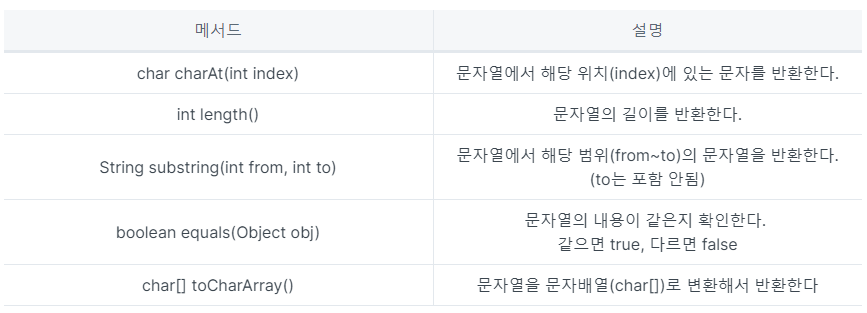
Array, String
- Key Array methods
- equals()
- toString()
- copyOf()
- copyOfRange()
- sort()
- Key String methods
blabla
Java seems to want even the values you pass around to be objects rather than raw primitives.
Let’s take a look at the stream methods you use on collection objects.